| Detail | What is listed | Planning use |
|---|---|---|
| 2025 edition dates | 15 November 2025 to 4 January 2026 | Shows the usual shape of the season, from mid-November to early January. |
| 2026 to 2027 listed dates | 14 November 2026 to 3 January 2027 | Use for next season’s trip and confirm closer to travel. |
| Opening hours (2025 edition) | Daily 10:00 to 19:00 | Fits a daytime visit; arrive well before 19:00 to browse properly. |
| Entry (2025 edition) | Free | No ticket to book, so the fair suits a spontaneous stop. |
| Location | Vieux-Port, Quai du Port | Head to the harbour front, not to a city-centre square. |
| Stalls (2025 edition) | About twenty artisan santon makers in cabanons | Small enough to compare every maker in one visit. |
Figures come from the Made in Marseille announcement of the 2025 edition and a Hostelworld listing for the 2026 to 2027 season. The Hostelworld dates come from a booking listing, so they are worth confirming nearer the time.
The foire aux santons Marseille runs each winter on the Vieux-Port, from mid-November to early January, with free entry in the 2025 edition. Opening hours have differed between editions, so check them before travelling.
For the wider calendar, the events in marseille hub is the place to compare this fair with the city’s other annual dates. This guide follows the season from planning to buying, then closes with troubleshooting.
Before you go: dates and hours
The fair opens in mid-November and closes in early January, so any December visit falls inside the season. Maritima reported that the 2024 edition opened on 16 November 2024 and ran to 5 January 2025, open every day from 10:00 to 19:00 and until 20:00 on Fridays and Saturdays. The 2025 edition, according to Made in Marseille, ran from 15 November 2025 and was listed daily from 10:00 to 19:00. The 2024 programme published by La Chaudronnerie gives the same weekday split as Maritima: Sunday to Thursday from 10:00 to 19:00, and Friday and Saturday from 10:00 to 20:00.
Because each edition has set its own dates and hours, treat a listing as a planning estimate until a current programme confirms it.
Use this sequence to settle your plan:
- Match your day to the closing time. A Friday or Saturday gave an extra hour in 2024, while the 2025 listing shows a flat 19:00 close. Do not count on late evening browsing unless the current programme confirms it.
- Decide whether you are buying or looking. Buyers should allow time to speak to several makers, and with about twenty stands a single visit can cover the whole row. Casual visitors can treat the fair as a short harbour-front stop, since entry was free in 2025.
Finding the stalls on the Vieux-Port
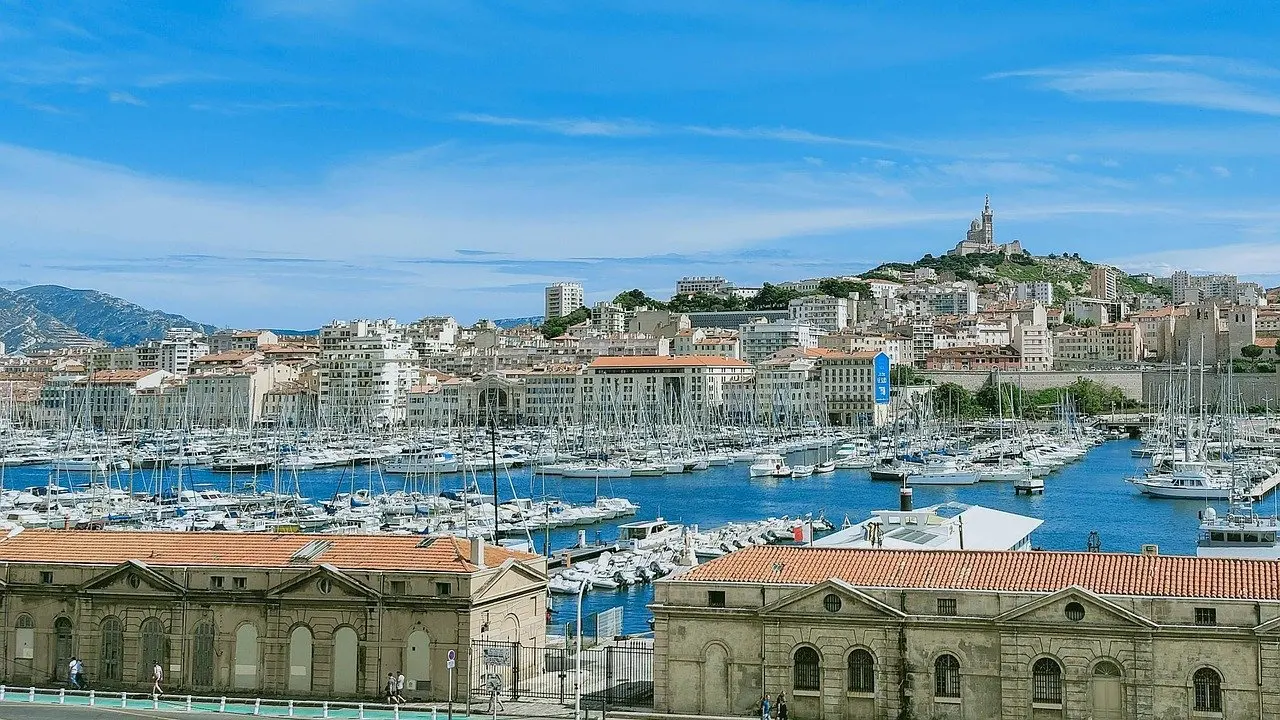
The fair sits on the Vieux-Port at Quai du Port, 13001 Marseille, according to La Chaudronnerie’s 2024 fair page. For a visitor, the practical point is that the harbour front is the destination, not a square in the city centre.

That scale matters for buyers. Maritima noted about twenty stands on the Vieux-Port in 2024, so the whole fair can be walked in one pass and the makers compared before any purchase. Walking the full row first also shows how far the styles differ from one stall to the next, which is useful before committing to a single figure.
Where santons come from
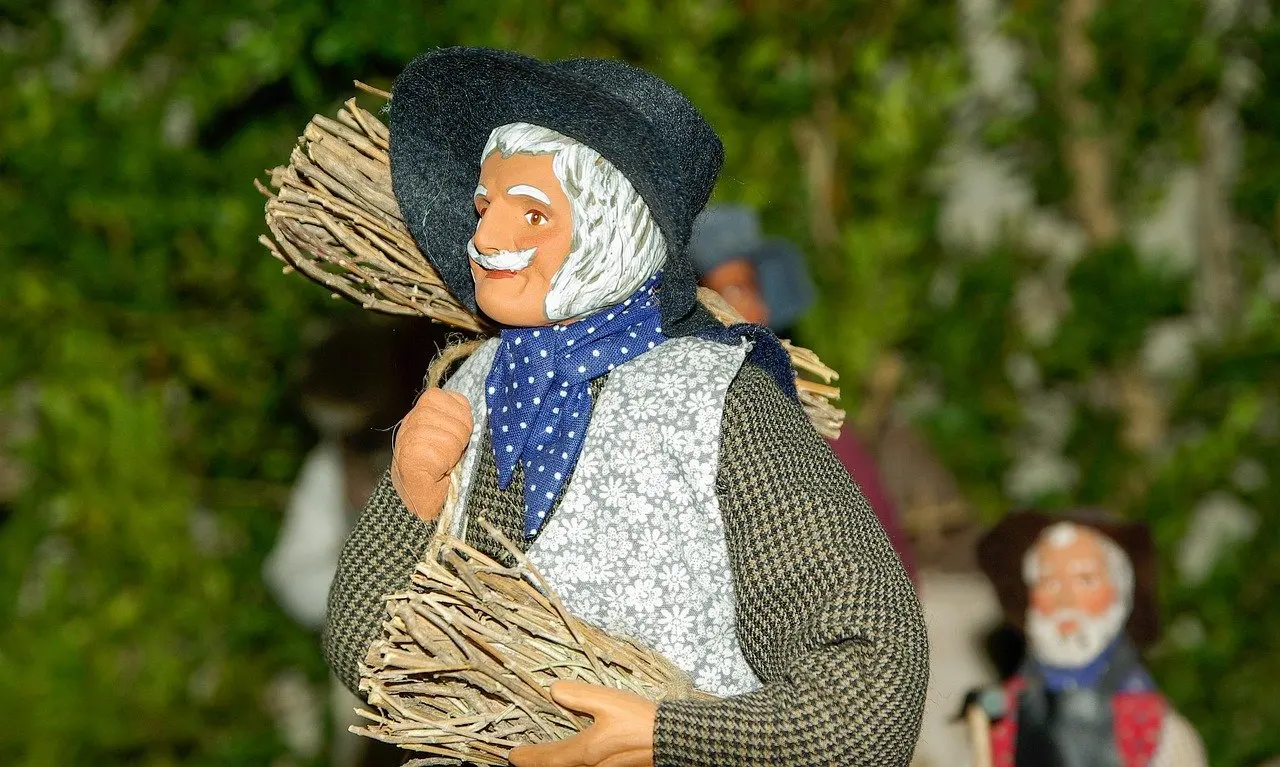
Santons are small hand-made figures for the Provençal nativity scene. La Chaudronnerie places the Provençal santon tradition in the 19th century. Maritima describes the fair as keeping alive a tradition dating from 1803. The two dates answer different questions: one places the santon tradition in Provence, the other the fair’s own lineage.
A distinct regional form
Provençal santons are also a distinct regional form. A maker quoted by Maritima points out that santons exist in many other countries, but the Provençal ones are specific. For a buyer, that difference is the reason to look for figures made in the Provençal style rather than any small clay figure labelled as a santon.
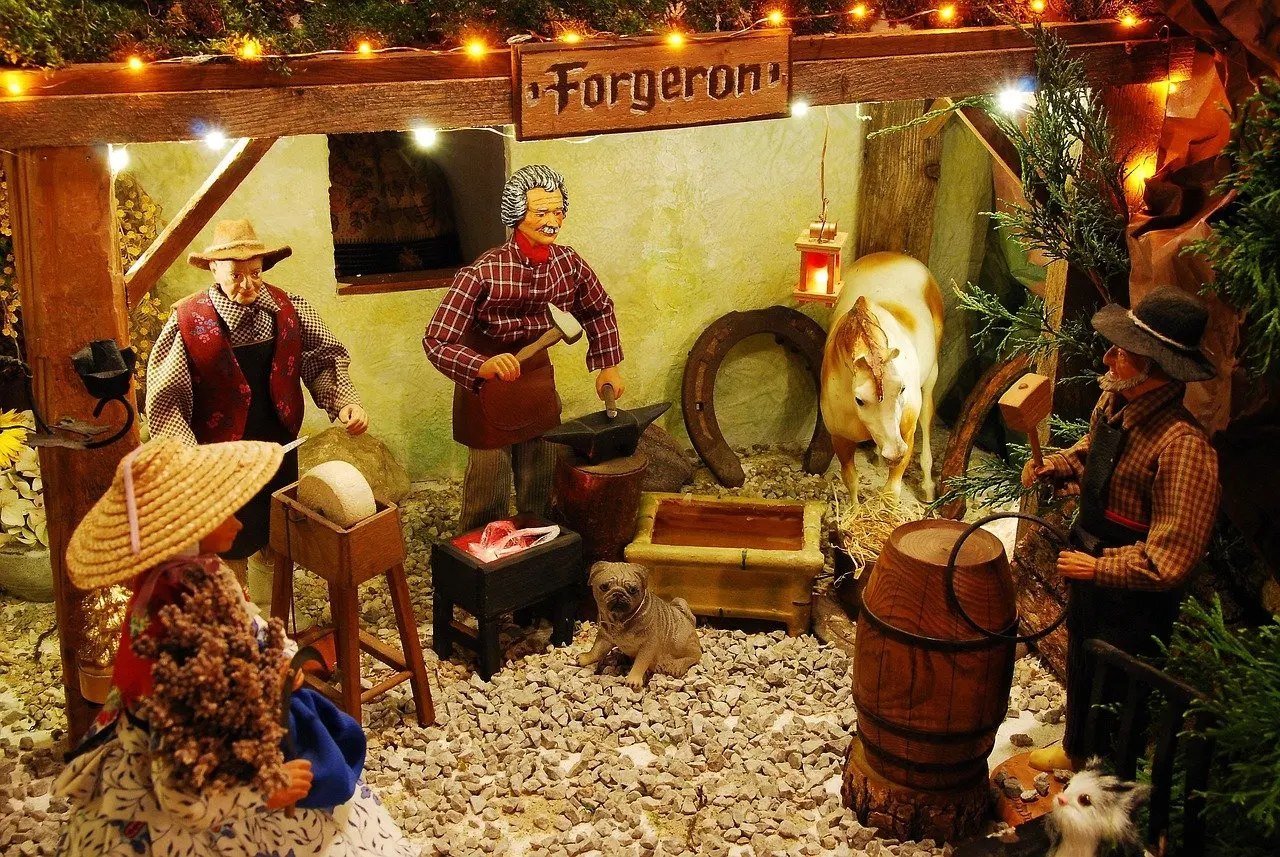
Made in Marseille adds that the figurines are shaped by hand and that stalls show both traditional and contemporary scenes. A buyer can therefore choose between classic village characters and more modern interpretations, and both remain within the same craft.
Choosing santons at the cabanons
The most direct test of a handmade santon is the maker standing behind it. The fair is built around artisans presenting their own creations, so the question “who shaped and painted this figure?” can be put to the person who made it.
- Walk the full row first. With about twenty stalls, one slow pass shows the range of styles before you commit to a purchase.
- Ask about the making process. The Hostelworld listing describes artisans who craft and hand-paint clay figurines, and Made in Marseille describes figurines shaped by hand. A stallholder who makes the figures can explain each step.
- Read origin wording as a prompt, not proof. La Chaudronnerie’s programme promotes original santons marked “Made in Provence”. Treat that phrase as a reason to ask where and by whom a piece was made, not as an independent guarantee.
- Pick a style deliberately. Traditional scenes suit a classic Provençal nativity set, while contemporary scenes suit buyers who want a modern accent. A set built around one style is easier to arrange than a mix of both.
Buyers who want a complete village should compare what each maker offers in the same style before buying, since a single figure from one stall rarely settles the whole set.
Late season and troubleshooting
Confirming the last day
Anyone travelling in early January should confirm the final day with the current programme, because the closing date has differed between the editions covered here. A visit planned around the last weekend should be checked against the Friday and Saturday hours listed for earlier years.
Searching for Cours d’Estienne d’Orves
Some searches pair the santons fair with Cours d’Estienne d’Orves. The 2024 and 2025 sources in this guide place the fair on the Vieux-Port, so use the Quai du Port address as the working location and check any other address against the current listing. The 2026 to 2027 listing also names Quai du Port.
Fitting the fair into a wider plan
Because the fair runs through the winter months, it is a seasonal outing rather than a summer one. Visitors looking for food and drink events can read the marseille food festival guide, and those comparing seasonal dates can also check the marseille pride date guide before fixing a trip.
Frequently asked questions
Is entry to the santons fair free?
Made in Marseille listed the 2025 edition with free entry, so no ticket needs to be booked.
Is it the oldest santons fair in France?
Made in Marseille describes it as the oldest santons fair in France. Maritima counted the 2024 edition as the 222nd, and Made in Marseille called the 2025 edition the 223rd.
Are there workshops or shows for visitors?
Made in Marseille listed santon-making workshops for the more creative, live shows and concerts in the 2025 programme.